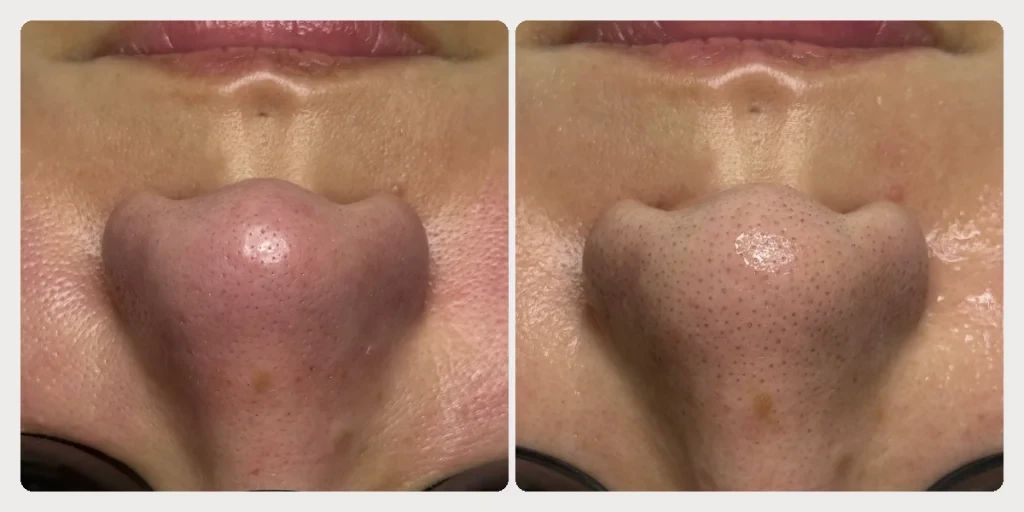
Heavy sebum congestion on the nose, dense blackheads in the T-zone visibly cleared after 1 Deep Sebum Cleansing session in Da Nang
Real case series · Coleni Beauty · 30/07/2026
Many people with oily skin get stuck in the same cycle: washing their face regularly, exfoliating regularly, even using nose pore strips, yet the nose and T-zone still feel rough, look greasy, pores become more visible, and blackheads return very quickly. The issue is not that the skin is “not being cleansed enough,” but that sebum has built up deep inside the follicles and accumulated in layers. The case below is a typical example at Coleni Beauty: a 26-year-old female client with oily skin, severe congestion on the nose, dense blackheads, and visibly enlarged pores. After 1 session of Deep Sebum Cleansing, the surface of the nose looked instantly clearer, blackheads were visibly reduced, and the T-zone appeared less greasy on the same day.
Background
| Factor | Initial condition |
|---|---|
| Age | 26 years old |
| Skin type | Oily skin, strong sebum production in the T-zone |
| Main concern | Deep sebum congestion on the nose and around the nostrils, dense blackheads, visibly enlarged pores |
| Duration of the issue | Ongoing and recurring despite regular facial cleansing |
| Visible signs | Rough nose, oily shine, dense blackheads, uneven skin texture |
| Contributing factors | Overactive sebaceous glands, hot and humid climate, surface cleansing alone is not enough to address deep congestion |
An important point in this case is that the congestion was heavily concentrated on the nose and T-zone, the areas where sebaceous glands are most active. For this type of skin, using only a facial cleanser or oil-control products at home usually addresses only the oil sitting on the surface, while the compacted material deep inside the pores remains.
Diagnosis
Before treatment, the Skin Coach at Coleni performed a skin analysis and directly examined the nose area to distinguish between surface oil, sebaceous filaments, oxidized blackheads, and long-accumulated pore debris.
| Assessment item | Observation |
|---|---|
| Oil production level | High on the nose and T-zone |
| Level of congestion | Severe, with a large amount of sebum debris accumulated inside the follicles |
| Blackheads | Dense, clearly visible on the nose and around the nostrils |
| Pores | Enlarged and more visible due to prolonged congestion |
| Skin sensitivity | No notable acute irritation observed before the cleansing session |
| Appropriate diagnosis | Congested oily skin with blackheads on the nose, best addressed with deep cleansing through a soften – extract – rebalance oil mechanism |
The honest diagnosis here was not “inflamed acne” or a condition requiring invasive intervention, but rather heavy sebum congestion that needed to be treated properly. If the steps are done in the wrong order, or if extraction is forced while the sebum is still hardened, the skin can easily become red, painful, and the results will not last. Therefore, the most suitable approach was a layered deep-cleansing protocol rather than simple manual extraction or suction alone.
Solution
The chosen method was Deep Sebum Cleansing, combining three intentional groups of steps: softening the sebum first, deeply suctioning the follicles next, then balancing oil and helping the pores appear more refined in the final step. This is the key difference between a protocol-based deep-cleansing session and a standard surface-level skin cleansing treatment.
The solution consisted of three core components:
1. Enzyme to soften and loosen sebum
The enzyme step helps soften the bonds of sebum debris lodged deep inside the follicles. When combined with steam, the pores are opened in a controlled way so the sebum softens gradually instead of being forcefully pulled out. This approach is gentler and creates better conditions for the extraction step that follows. For clients with heavy congestion on the nose, this step is almost decisive for the quality of the result.
2. Aqua suction for deep cleansing from the inside out
The Aqua part of the process follows a similar approach to Aqua Cleansing: using water pressure to help flush out dirt, excess oil, and sebum from the pores. Once the sebum has been softened beforehand, the suction process becomes smoother, requires less mechanical force, and reduces discomfort.
3. Greek oil-control mask to rebalance and help refine the surface
After the pores have been emptied, the oil-control mask helps absorb excess oil, soothe the skin, and support a smoother, drier-looking skin surface. This step does not make the pore structure “disappear,” but it helps the nose area look less prominent and less shiny after the cleansing session.
In essence, this case was successful because the treatment did not try to address blackheads as an isolated issue. Coleni started with the root cause, the sebum buildup inside the follicles, and only then addressed the visible signs such as blackheads and enlarged pores. This is also why, for oily skin, a properly performed deep-cleansing session is often far more effective than aggressive scrubbing at home.
If you are unsure between different options for cleansing oily skin, you can also read Deep Cleansing Facial in Da Nang: Which Treatment Is Right for Your Skin? to better understand when to prioritize deep cleansing and when to choose a recovery or acne-focused protocol.
Procedure
Below is the sequence performed during this client’s treatment session at Coleni Beauty:
-
Cleanse the skin base according to the standard Coleni protocol
Remove dust, surface oil, sunscreen residue, and leftover product buildup to prepare the skin for the deeper steps that follow. -
Enzyme therapy combined with steam
Softens sebum plugs and helps open up the nose and nostril areas in a controlled way. This is the preparation step before deep suction. -
Aqua cleansing with water-pressure suction
Extracts sebum residue, impurities, and accumulated oil from the follicles. This step is especially effective on the nose, around the nostrils, and the forehead. -
Remove blackheads and any remaining congested debris
After softening and pre-suctioning, the remaining material is easier to handle, can be cleared more thoroughly, and causes less discomfort to the skin. -
Greek oil-control mask
Helps rebalance oil, soothe the skin after deep cleansing, and make the T-zone surface appear smoother. -
Electroporation infusion and finishing sunscreen
Provides nourishment after cleansing while protecting the skin before the client leaves the session.
For people with oily skin that is still sensitive during cleansing, Coleni pays close attention to the order of steps and the level of impact on the skin. Many clients also choose to first learn carefully through Understanding Your Skin: The First Step to Effective Treatment at Coleni before starting any treatment plan.
Progress
Coleni recorded real before-and-after images during the same session to monitor the level of visible change on the surface of the nose area.
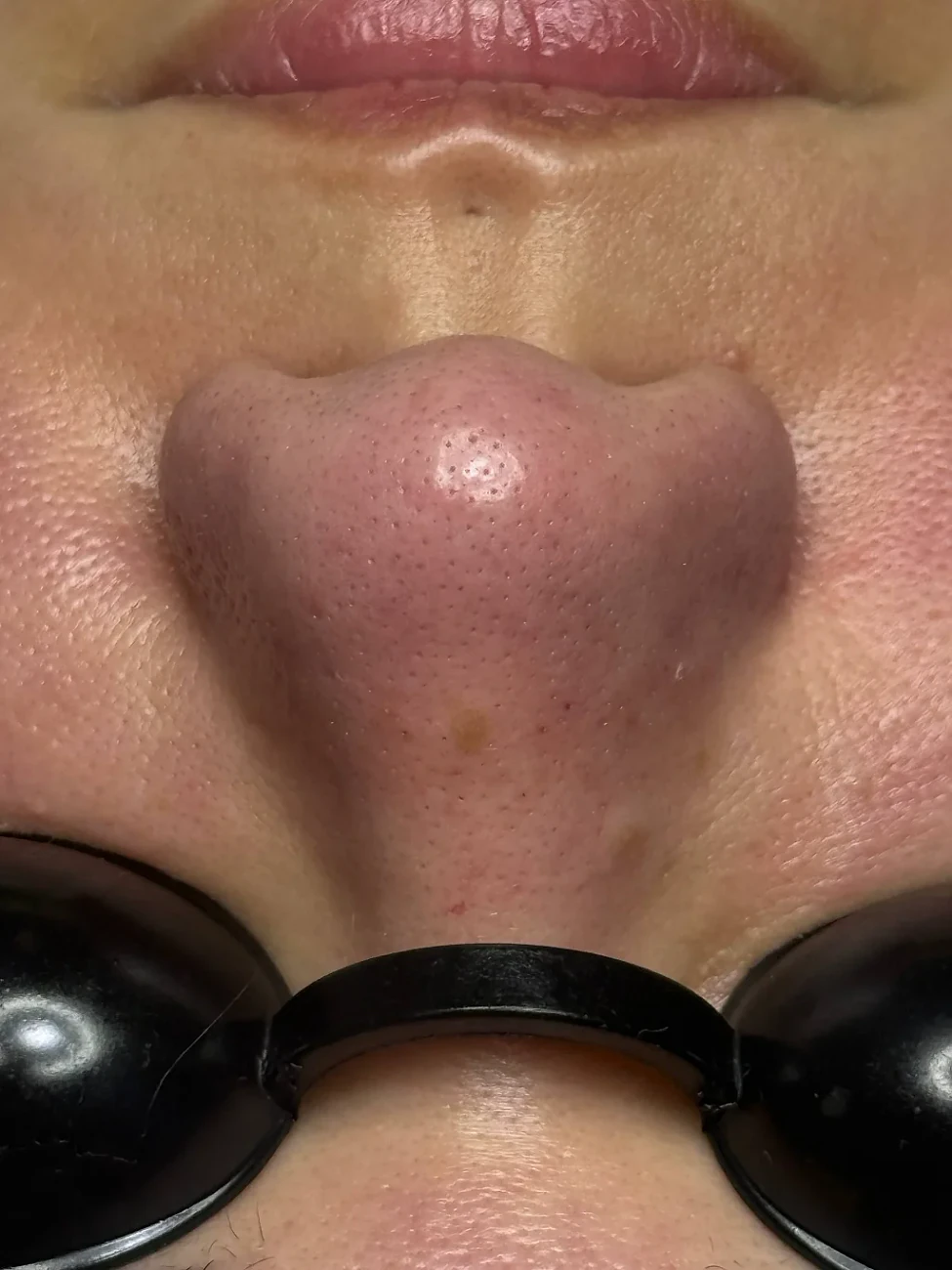
In the before-treatment image, the congestion on the nose surface is clearly visible: dense blackheads, prominent follicles, an oily T-zone, and uneven texture. This is a typical appearance of long-term sebum buildup, where the oil oxidizes and turns darker at the opening of the follicles.
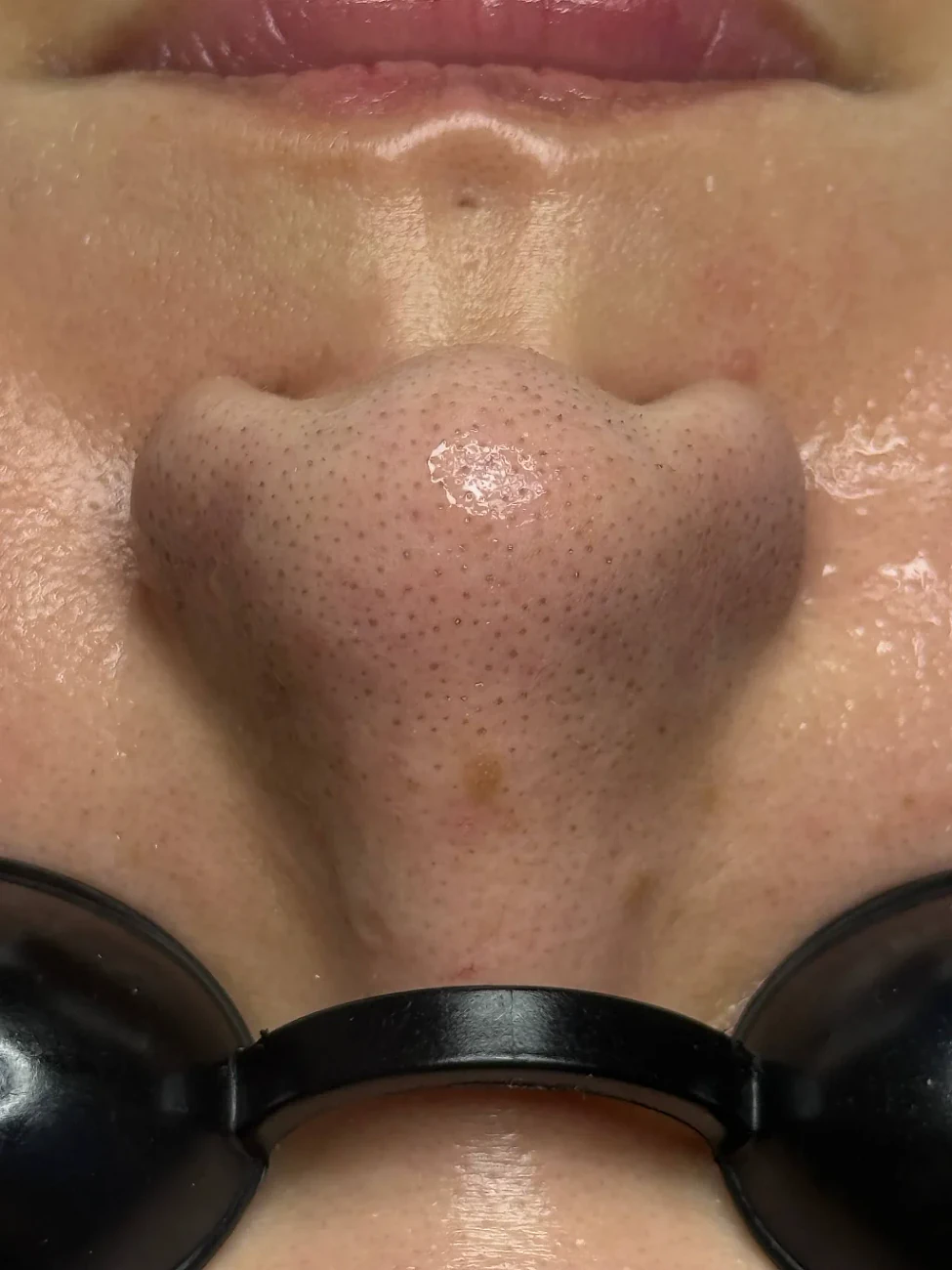
After the Deep Sebum Cleansing session, the nose area looked visibly cleaner and clearer to the naked eye. Blackheads were greatly reduced, follicles were less congested, and the skin surface appeared smoother. No prolonged redness was observed after treatment; the slight sheen on the nose came from the restorative serum after electroporation, rather than the greasy shine caused by congestion as before.
Results
| Item | Observation after the first session |
|---|---|
| Sebum on the nose | Visibly cleansed |
| Blackheads | Instantly reduced, with many plugs successfully extracted |
| Pores | Clearer and the surface looks more refined |
| Oily shine in the T-zone | Clearly reduced after the session |
| Skin feel | Lighter, less roughness on the nose |
| Downtime | No downtime needed |
These results came from treating sebum congestion according to its actual mechanism:
- Softening first helps the buildup stop clinging too tightly inside the follicles.
- Extracting at the right time helps remove the sebum sitting below the surface, beyond the part visible on top.
- Rebalancing oil after cleansing helps the skin look less shiny and more stable immediately after the session.
To maintain results, clients with oily skin and recurring blackheads should schedule regular deep cleansing instead of waiting until the nose becomes heavily clogged again. Depending on the skin condition, it can be combined or alternated with Enzyme Cleansing or Aqua Cleansing when needed to maintain pore clarity between care milestones. Beginners can also read How to Find the Best Facial in Da Nang for Your Skin Type to choose the right care direction for oily skin.
Recommended maintenance plan:
- Monitor the amount of oil in the T-zone and how quickly blackheads return.
- Maintain deep cleansing every 3–4 weeks if oiliness remains at a stable level.
- If sebum clogs return quickly, the frequency can be shortened based on direct assessment after skin analysis.
- Avoid harsh rubbing and frequent pore strips at home to prevent making the skin surface more sensitive.
Suitable for
- Oily skin with heavy sebum in the nose and T-zone
- People with dense blackheads that keep coming back despite regular cleansing
- Visible pores caused by prolonged congestion
- Rough, heavy-feeling skin that lacks a sense of clarity
- People who want to deeply cleanse the skin before moving on to recovery or other skin-adjustment treatments
- People living in or traveling to Da Nang, where the hot and humid climate makes excess oil accumulate more quickly
Lessons / Key takeaways
- A clean skin surface does not mean the pores are clean. For oily skin, deep congestion is the real cause of persistent blackheads and enlarged pores.
- The treatment order determines effectiveness. Softening first, extracting next, and rebalancing at the end is always more effective than forcing out plugs while the sebum is still hardened.
- Oily skin needs regular deep cleansing, not excessive daily stripping. Overly aggressive home care can irritate the skin without fully resolving the congestion.
- One suitable session can produce visible changes right away, but long-term maintenance determines lasting stability.
Frequently asked questions / FAQ
Can Deep Sebum Cleansing remove blackheads on the nose?
Yes. Deep Sebum Cleansing combines 3 methods: Enzyme softens and loosens sebum inside the pores, Aqua (water-pressure suction) removes sebum and impurities, and the Greek oil-control mask rebalances and tightens the pores afterward. Results are usually visible right after the first session.
Will pores become larger after Deep Sebum Cleansing?
No. The protocol is designed not to cause irritation. The Enzyme + steam step opens the pores in a controlled way, and the Greek mask then helps refine them again. The skin usually looks smoother and the pores appear less visible immediately after the session.
How often should oily skin with blackheads get Deep Sebum Cleansing?
It is recommended every 3–4 weeks to maintain clear pores and stable oil control. For very oily skin with quickly recurring blackheads, the interval can be shortened to 2–3 weeks depending on the condition.
Does Deep Sebum Cleansing hurt? Is there any downtime?
No, it is not painful and requires no downtime. All steps are performed gently, without causing swelling or prolonged redness. Clients can go out and resume normal activities immediately after the session.
Results may vary depending on the level of congestion, skin baseline, sebum amount, and each person’s home care. This content is for reference only and does not replace direct skin assessment.
If you are dealing with a rough nose, dense blackheads, and a persistently oily T-zone, you can view the Service menu to choose a suitable service and book a skin analysis with Coleni Beauty.