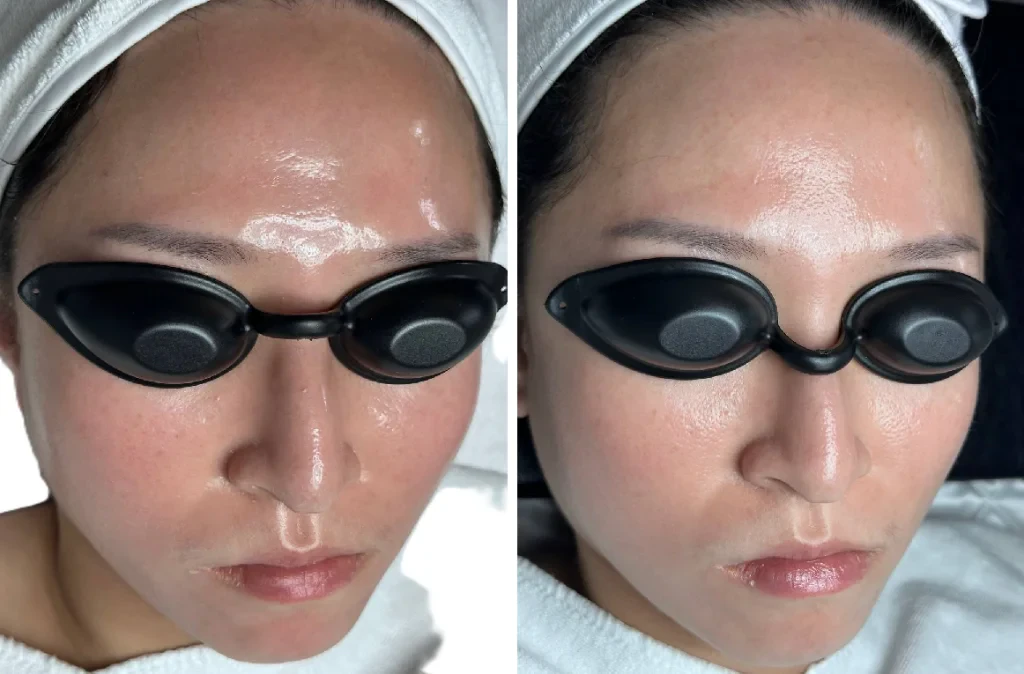
80% reduction in redness after 1 Skin Redness PDT session in Da Nang
Real case study · Coleni Beauty · 13/06/2026
Persistent facial redness, mild burning, and easily irritated skin are often signs of a compromised skin barrier rather than a temporary cosmetic issue. This real case study at Coleni Beauty documents a 26-year-old female client in Da Nang with sensitive skin, ongoing redness for around 1 month, and increased reactivity during Isotretinoin use combined with strong summer UV exposure.
After an in-person skin assessment, Coleni selected the Redness PDT Treatment protocol using the Skymedic Fotoage Mask system. The goal was not aggressive resurfacing, but a gentler, targeted approach to calm inflammation, reduce visible redness, and support barrier recovery without adding unnecessary irritation.
Case background
| Information | Details |
|---|---|
| Age | 26 years old |
| Gender | Female |
| Skin type | Sensitive skin |
| Duration | About 1 month |
| Main symptoms | Whole-face redness, concentrated on the cheeks; skin tightness; mild burning |
| Medication in use | Isotretinoin in an acne treatment regimen |
| Contributing factors | Da Nang summer sun, high daily UV exposure |
Isotretinoin was a major factor in this case. While it can be effective for acne, it can also make skin drier, thinner, and more sensitive to sunlight. In a hot, high-UV environment like Da Nang, that combination can easily lead to prolonged redness, inflammation, and slower skin recovery.
From the outside, this kind of condition is often mistaken for simple irritation or temporary flushing that moisturizer alone can solve. But for skin currently using Iso, the treatment plan must be much more cautious and barrier-focused. That is why Coleni begins with direct assessment rather than guessing based on appearance alone. For more on that approach, see Understanding Your Skin: The First Step to Effective Treatment at Coleni.
Skin assessment
At Coleni, redness-prone skin is assessed on multiple levels, including barrier strength, inflammatory activity, hydration, medication-related sensitivity, and environmental triggers.
| Assessment factor | Findings | Severity |
|---|---|---|
| Skin barrier | Clearly weakened, reduced moisture retention | Severe |
| Inflammatory response | Widespread redness, especially visible on the cheeks | High |
| Impact from Isotretinoin | Thin skin, strongly sensitive to UV and topical products | Requires monitoring |
| Environmental factors | Harsh sunlight and high temperatures worsen the condition | Significant |
| Skin hydration | Dehydrated, tight, mild flaking | Moderate |
Diagnosis summary: the main issue was inflammation combined with a weakened skin barrier, not active bacterial infection and not primarily a pigmentation concern.
Because of that, stronger options that may further stress sensitive skin, such as intense peeling, aggressive exfoliation, or heat-based energy treatments, were not appropriate at this stage.
Why this treatment was chosen
The selected protocol was Redness PDT Treatment using the Skymedic Fotoage Mask together with the Skinox Redness active system. This was chosen because the priority was to calm reactive skin, reduce inflammation, and encourage recovery in a controlled, less invasive way.
For clients with sensitive or redness-prone skin, this approach also aligns with the gentle treatment principles discussed in Facial Spa in Da Nang for Sensitive or Red Skin: Gentle Options That Still Deliver Results.
The science behind Skin Redness PDT
The core of this protocol is Photobiodynamic Therapy (PDT). In this case, the photosensitive formula was activated by 590nm ±10 yellow light from the Skymedic Fotoage Mask. When active ingredients are exposed to the correct wavelength, the photobiological response can support soothing and regeneration more effectively than topical application alone.
The treatment is therefore not comparable to applying a regular serum at home. The result depends on the interaction between the professional formula and the correct light activation protocol.
Active ingredients used in the treatment history
Specialized peel (pH 1.7–2.7):
| Ingredient | Concentration | Role |
|---|---|---|
| Azelaic Acid | 15% | Supports anti-inflammation, reduces redness |
| Mandelic Acid | 5% | Supports regenerative stimulation |
| Phytic Acid | 5% | Mild keratolytic |
| Lactic Acid | 5% | Supports evening post-inflammatory tone |
Photodynamic Serum:
| Ingredient | Concentration | Role |
|---|---|---|
| Hyaluronic Acid LW | 0.5% | Surface hydration |
| Hyaluronic Acid HW | 0.3% | Supports deeper water retention |
| Colloidal Silver | 0.2% | Component involved in the photodynamic mechanism |
| Melatonin | 0.01% | Supports antioxidant action |
| Coralline P | 3% | Supports cellular oxygenation |
| Azeloglicine | 5% | Supports soothing and hydration |
| Arabian Cotton | 2% | Supports antioxidant action, soothing |
Treatment procedure
The full session lasted about 120 minutes.
- 5-step deep cleansing with specialized products to remove dirt, excess oil, and prepare the skin.
- Gentle extraction if needed to reduce localized inflammatory pressure.
- Skymedic Redness peel using Azelaic 15% + Mandelic 5% + Phytic 5% + Lactic 5% for about 3 minutes.
- Application of Photodynamic Serum followed by 15 minutes under the Skymedic Fotoage Mask with 590nm yellow light to activate the photobiological response.
- Essence infusion and SPF50+ sunscreen to support hydration, reinforce the skin barrier, and protect skin after treatment.
The key in this case was making sure each step served a clear purpose: cleansing, calming inflammation, hydrating, and protecting vulnerable skin.
Before and after Skin Redness PDT
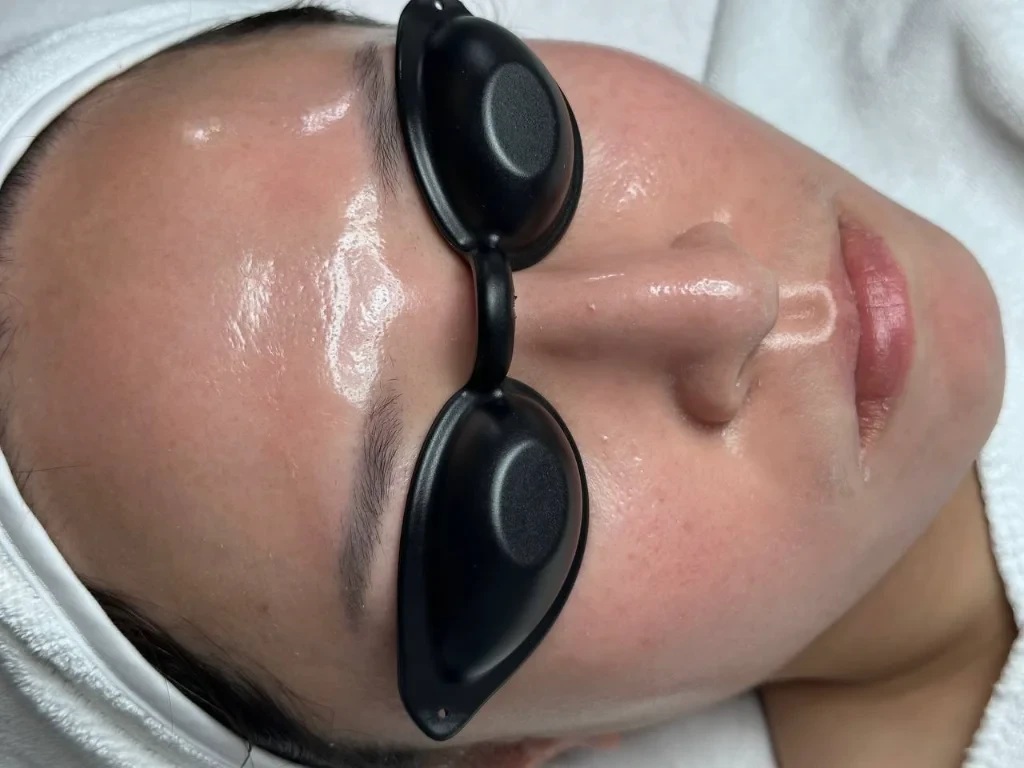
Before treatment: the cheeks were clearly red, the skin looked thin, tight, and showed signs of active inflammation.
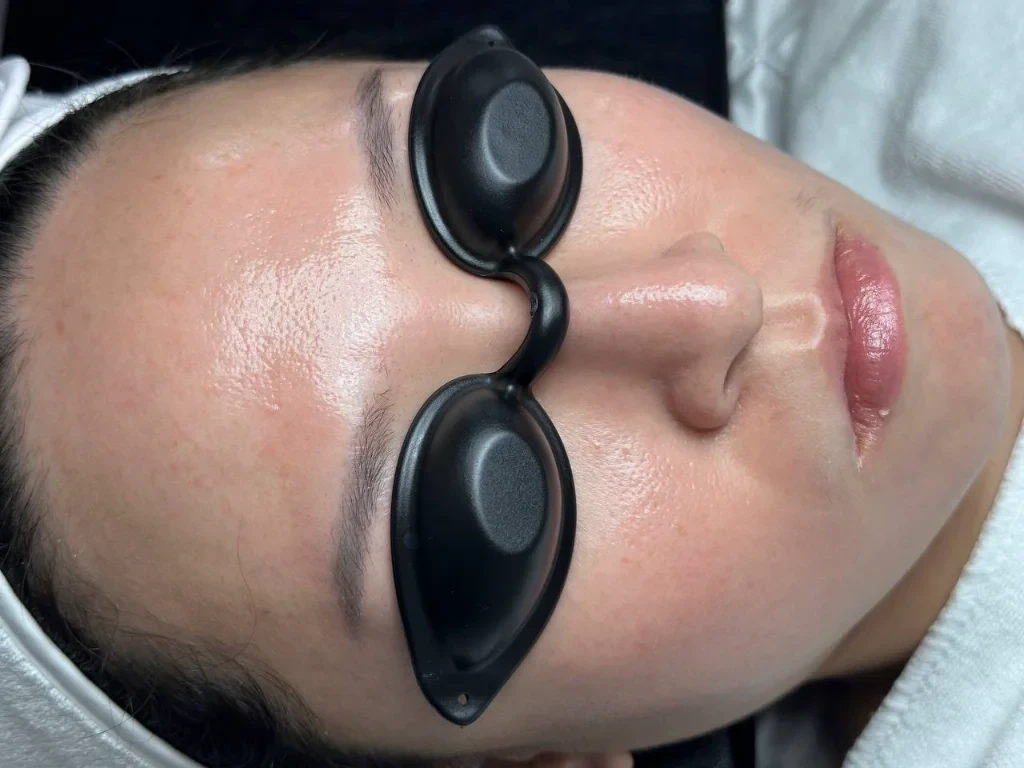
After 1 session: skin tone looked more even, cheek redness was visibly reduced, and the skin appeared calmer on the same day.
Results after 1 session
| Metric | Findings |
|---|---|
| Level of redness improvement | About 80% after 1 session |
| Number of sessions showing results | 1 session |
| Peeling/flaking | None recorded |
| Additional irritation | None recorded |
| Daily life interruption | No, able to go out after the session |
This improvement came from targeting the actual cause. Rather than stronger exfoliation, the skin needed a protocol focused on inflammation control, visible redness reduction, hydration, and barrier support.
Azelaic Acid helped support the anti-inflammatory direction, while the photosensitive serum was activated by 590nm yellow light. Hydrating and antioxidant ingredients also helped the skin feel less tight and less reactive after the session.
Recommended maintenance plan
- Continue with 3–5 sessions of Redness PDT Treatment, spaced 1–2 weeks apart, to further support skin barrier recovery.
- Once the skin becomes more stable, supportive recovery options such as Skin Recovery may be combined if directly assessed as suitable.
- Maintain gentle basic care at home. If there is buildup or mild congestion later on, very gentle options such as Aqua Cleansing may be considered at the right time, not while the skin is still highly reactive.
- Avoid direct UV exposure from 10:00 to 16:00.
- Pause retinol and AHA/BHA until the skin is more stable.
Client quote
“Thank you so much, Coleni, for making my skin stop being red.”
Who this treatment may be suitable for
- Skin with prolonged redness, burning, or easy irritation
- Sensitive skin with a weakened barrier
- Skin made red by sun, heat, or environmental stress
- Skin undergoing Isotretinoin use and needing recovery support
- People looking for a low-downtime, no-peeling option
- Anyone who wants a careful skin assessment before choosing treatment
Key takeaways
- Isotretinoin combined with strong sun exposure can be a common trigger for prolonged facial redness.
- Red or inflamed skin should not be treated with a “stronger is better” mindset.
- Identifying the true cause matters more than following a trend. Redness linked to inflammation and barrier damage needs a different treatment direction from redness caused by other concerns.
- Sun protection is part of the treatment plan, not an optional extra.
FAQ
How many sessions are usually needed for chronic redness?
In this case, Coleni recommended a course of 3–5 sessions to continue supporting the skin barrier, even though visible improvement was already recorded after the first session.
Is the treatment painful or uncomfortable?
No significant pain was recorded. The peel was carefully time-controlled, and the Skymedic Fotoage Mask step generally created only a mild warm and comfortable sensation.
Is there downtime after treatment?
No. In this case, there was no recorded peeling or additional irritation, and the client was able to continue normal daily activities after the session.
Can Skin Redness PDT be done while using Isotretinoin?
In this real case, the protocol was chosen specifically because it followed a non-invasive, non-strong-heat direction and did not rely on deep peeling methods, making it more appropriate for skin sensitized by Iso.
Why shouldn’t Skinox Redness serum be used alone at home?
Because it is a photosensitive product designed to be activated by 590nm yellow light from the Skymedic Fotoage Mask in order to deliver the intended photobiological effect.
Conclusion
This case shows that visible redness reduction does not always come from stronger treatment. For sensitive skin in Da Nang affected by Isotretinoin, sun exposure, and barrier weakness, a well-chosen calming protocol can be the more effective path. With the right assessment and a targeted redness-focused approach, the skin can look noticeably calmer even after a single session.
Results may vary depending on skin condition, individual biology, and each person’s response. This content does not replace personalized consultation or medical diagnosis.
If you are experiencing red skin, sensitive skin, or post-irritation barrier weakness and are not sure which treatment direction fits your condition, explore the Service menu or book a direct consultation with Coleni Beauty.